OBITUARY
Dr Chandra Mohan Gulhati (1940–2025): The Rational Drug Policy Movement loses a colossus
S Srinivasan, Sarojini Nadimpally, Anurag Bhargava
Published online first on February 3, 2026. DOI:10.20529/IJME.2026.005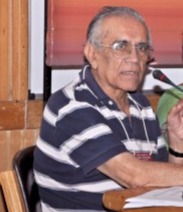
Dr Chandra Mohan Gulhati passed away on November 24, 2025. He was 85. His death marks a loss not only to the medical community, but to patients, public health advocates, and all those committed to ethical, evidence-based healthcare.
While working and studying in the United Kingdom (UK), Dr Gulhati would visit India, and note the sorry state of knowledge and practice related to medicines in India: no updated information was available on medicines, including their rational use and side-effects. As a physician who practised for many years in the UK, he would tell us that in the UK, if 100 patients with the same condition, say acute diarrhoea, were to consult their doctors, 99 of them would get the same prescription. In India, 99 of them would get different prescriptions. A commentary on the lack of adherence to Standard Treatment Guidelines in India, which exist, but only on paper.
MIMS India: the genesis
As his contribution to remedy the anarchic situation in the practice of medicine in India, Dr Gulhati helped start the Indian equivalent of the British Monthly Index of Medical Specialties (MIMS), which he consulted often when working in the UK. For over four decades, from around 1980, Dr Gulhati edited MIMS India with relentless regularity. It became one of India’s most circulated publications of its kind.
Under his stewardship, MIMS India became far more than a drug compendium; it evolved into a platform for fearless critique of irrational medicines, unethical clinical trials, exploitative pricing, regulatory failures, and corporate influence over medical practice. His editorials were incisive, evidence-based, and uncompromising — often solitary expressions of reason in an otherwise compliant ecosystem. One of the authors of this obituary would rely on MIMS India during his work in rural India as a reliable ready reckoner while seeing patients and prescribing medicines.
Unethical clinical trials, compensation, ethics committees
One of Dr Gulhati’s lasting contributions was in the field of clinical trials in India. When India became a global destination for clinical trials, Dr Gulhati was alarmed to note that they were being conducted in an unsupervised, unethical and often illegal manner, with the drug regulatory authorities turning a blind eye. He co-authored, with Dr Samiran Nundy, an influential perspective piece in the New England Journal of Medicine (NEJM) (Nundy S, Gulhati CM. A new colonialism? Conducting clinical trials in India. N Engl J Med. 2005 Apr 21;352(16):1633-6.). Elsewhere, he raised a red flag about the unethical trials of letrozole for ovulation induction, and vaginal erythromycin. Dr Gulhati drew attention to the deeply troubling case of rivaroxaban trials in acute coronary syndrome (ACS) in India. Poor patients, he argued, died for no reason at all. The drug was ultimately not approved for ACS, rendering the sacrifices of Indian trial participants meaningless. He highlighted multiple violations: discrepancies in trial-related deaths reported to the US Food and Drug Administration (FDA) and the Drugs Controller General of India (DCGI): grossly inadequate and inconsistently paid compensation; and the lack of regulatory action against hospitals and investigators ‒ despite documented Good Clinical Practice (GCP) violations.
Dr Gulhati always based his arguments on facts, but then did not mince his words: “It may sound incredible but animals subjected to experiments in the United States enjoy more protection than humans in India. Any trial done on animals without the authority of the Ethics Committee is fined Rs 120,000 (US$ 2,500) under the US Animal Welfare Act. In India, more than 400 young women have been treated worse than animals in America.” He was referring to the letrozole trial conducted without permission from the DCGI. He also argued that debates on compensation, informed consent, confidentiality, or videography in trials were peripheral, unless India first demonstrated clear national benefit from conducting NCE/NBE trials ‒ within the framework of the Helsinki Declaration. Fragmenting responsibility among sponsors, contract research organisations, investigators, ethics committees, and hospitals, he warned, only ensured that accountability was diluted. Sponsors, he insisted, must bear full responsibility for injuries, deaths, informed consent, and compensation. “The process of converting a patient to a trial subject is so insidious and incentive driven (in the form of “latest”, otherwise “very expensive foreign drug” being given free of charge) that neither patients nor their families are in a position to really appreciate the implications much less protect their interests and legal rights. Secrecy adds to their woes since they are deprived of outside advice and expert opinion, independent of drug manufacturers appointed investigators with obvious conflict of interest….” (Secrecy in Drug Trials Hurts Subjects. Editorial, MIMS, Feb 2012).
He was scathing about the role of the so-called “Independent Ethics Committees” (IECs). In a series of editorials, he exposed how sponsors obtained blanket approvals from distant, privately run committees with no capacity, or incentive, to monitor trials or protect participants. “There is a deep nexus between IECs and the drug industry,” he wrote. “Can the vital interests of patients be protected by such industry-funded IECs? There is a solution: ban them”. (“Independent” Ethics Committees Help Drug Industry, Hurt Patients. Editorial, MIMS, June 2011.)
Drug pricing policy
In an Indian Express op-ed (dated 4th October 2012), Dr Gulhati called India’s drug pricing policy a permit for state-sanctioned profiteering; and inherently irrational, in a MIMS India editorial. (New Drug Pricing Policy: Inherently Irrational. Editorial. MIMS India, November 2011.)
…. Right from clothes to cars, prices of consumer products the world over are determined taking into account input costs, competition, margins and customer’s capacity to pay, popularly called Cost Based Pricing (CBP) system. Departing from this economically sound, fair, tried and tested principle of commerce, the government’s new drug pricing policy has come out with a new, never-heard-of-before methodology called Market Based Pricing (MBP). Under this strange system, the weighted average price of three top selling branded medicines will be the benchmark for price fixation. Why top three brands only? Why not top 10 to get a more reasonable figure? Why not take into account the price of drugs sold under their generic names also? Why not the average price of three or more least expensive brands…..The worst part of the new policy is that it will not tame the exorbitantly priced patented medicines of MNCs. Another committee, in existence since 2006, will take a decision in “due course” with no time limit!
He held that claims about price controls discouraging supply were fallacious: “…The actual cost of production of most drugs is less than 10% of the market price. Research costs are recovered in the West. Hence, if companies sell the drugs at even 20% of the western prices, they will make handsome profits due to sheer volumes…” (Flimsy Control on Prices of Patented Drugs. Editorial, MIMS India, March 2013.)
Dr Gulhati, the person
Dr Gulhati had not only an enormous fund of knowledge of medicine, the pharmaceutical industry, and the regulatory system, but also an uncanny capacity to separate the wheat from the chaff to prioritise the most forceful arguments, combining the qualities of a top-notch clinician with those of a top-notch lawyer. He also had a razor-sharp wit – sample this excerpt from his BMJ editorial on the marketing of medicines in India: “The commercial needs of countless, fiercely competing pharmaceutical companies have led them to depend on the tried and tested 3Cs: convince, if possible, confuse if necessary, and corrupt if nothing else works.” [Gulhati CM. Marketing of medicines in India. BMJ. 2004 Apr 3;328(7443):778-9.]
Dr Chandra Mohan Gulhati’s legacy is not merely one of critique, but of conscience. At a time when silence and complicity are often rewarded, he chose rigor, dissent, and truth. The Rational Use of Drugs movement in India, and globally, has lost one of its most steadfast and fearless champions. His absence leaves a void that will be difficult to fill, but his writings will continue to educate, provoke, and inspire future generations.
Readers may also refer to the citation read at the NBC felicitation of Dr Gulhati (IJME, 2011). See: https://doi.org/10.20529/IJME.2011.007
Authors: S Srinivasan (chinusrinivasan.x@gmail.com), Trustee, Low-Cost Standard Therapeutics (LOCOST), Vadodara, 390 001 India; Sarojini Nadimpally (sarojinipr@gmail.com) Public health researcher and Founder, Sama Resource Group for Women & Health, Saket, New Delhi, 110 017 India; Anurag Bhargava (anuragb17@gmail.com), Professor, Department of Medicine, Kasturba Medical College Mangalore, Manipal Academy of Higher Education, Manipal, 576104 Karnataka, India.
Conflict of Interest: None Funding: None
To cite: Srinivasan S, Nadimpally S, Bhargava A. Dr Chandra Mohan Gulhati (1940–2025): The Rational Drug Policy Movement loses a colossus. Indian J Med Ethics. 2026 Apr-Jun; 11(2) NS: 137-138. DOI: 10.20529/IJME.2026.005
Submission received: January 27, 2026.
Submission accepted: January 29, 2026.
Published online first: February 3, 2026
Copyright and license:
©Indian Journal of Medical Ethics 2026: Open Access and Distributed under the Creative Commons license (CC BY-NC-ND 4.0), which permits only noncommercial and non-modified sharing in any medium, provided the original author(s) and source are credited.